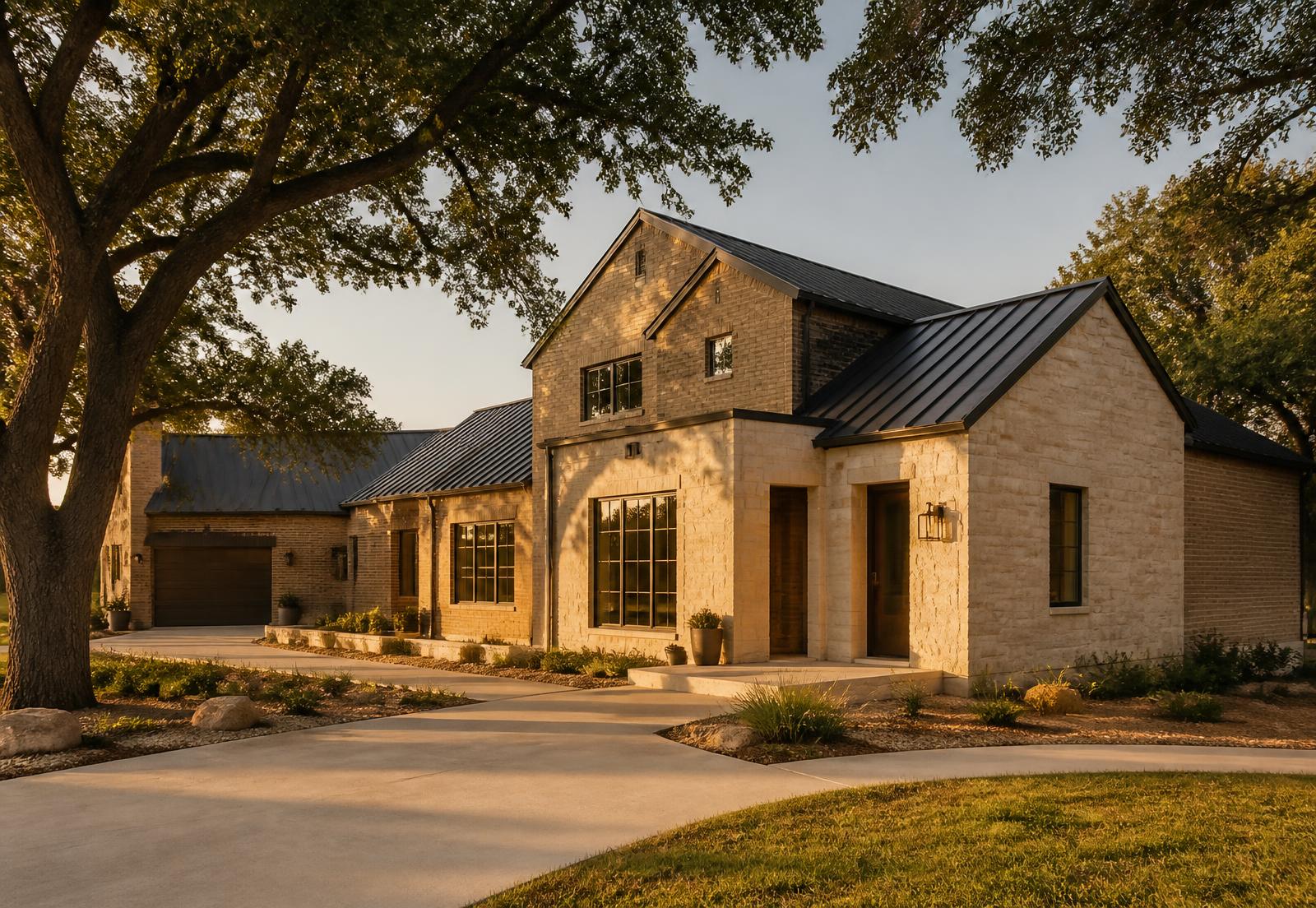
I hear it every week: "We're saving for 20% down." On a $300,000 house in Temple or Belton, that is $60,000 before closing costs. At $500 a month, that is ten years of saving.
Twenty percent has never been the entry fee. It is the point where you stop paying mortgage insurance on a conventional loan. That's worth knowing, and it's worth deciding on purpose instead of by default.
The four main loan types, side by side
| Loan | Minimum down | Mortgage insurance | Good fit for |
|---|---|---|---|
| Conventional | 3% for first-time or income-qualified buyers, otherwise 5% | Monthly PMI until you reach 20% equity; drops off automatically at 22% | Good credit, steady income |
| FHA | 3.5% with a 580+ credit score | 1.75% upfront plus 0.55% a year for most loans; stays for the life of the loan with less than 10% down | Buyers rebuilding credit |
| VA | 0% | No monthly insurance. A one-time funding fee, 2.15% on first use with nothing down, waived for veterans receiving VA disability compensation | Eligible service members, veterans, some surviving spouses |
| USDA | 0% | 1% upfront plus 0.35% a year | Moderate-income buyers in eligible rural areas |
What less down actually costs you
Here is a $300,000 house at 6.95% on a conventional loan, principal and interest plus an estimate for mortgage insurance. Taxes and insurance are the same in every row, so I've left them out to show the difference clearly.
| Down payment | Cash down | Principal and interest | PMI (estimate) |
|---|---|---|---|
| 3% | $9,000 | $1,926 | about $145 |
| 5% | $15,000 | $1,887 | about $120 |
| 20% | $60,000 | $1,589 | none |
Going from 3% to 20% down saves you about $480 a month. It also takes $51,000 more cash. If you'd have to wait years to save that, you're paying rent the whole time, and that rent builds no equity.
On the other hand, if you already have the cash and it would otherwise sit in savings, putting more down is a guaranteed return at your mortgage rate. There is no single right answer. There is a right answer for your numbers.
The VA loan, if you've earned it
Around Fort Hood, this is the one I spend the most time on. The VA loan needs no down payment and has no monthly mortgage insurance, which makes it the strongest low-down option out there for anyone who qualifies.
Two things people get wrong. It isn't one-and-done; you can use it again after you sell, and in some cases while you still own the first house. And the funding fee isn't automatic. If you receive VA disability compensation, you're exempt from it. More on buying around orders is on my military relocation page.
USDA: zero down, but check the address
USDA loans are for rural areas and have household income limits. In Bell County, the larger cities (Temple, Belton, Killeen, Harker Heights) generally don't qualify. A good share of the unincorporated county does. The line is drawn property by property, so check the exact address on the USDA eligibility map before you fall for a house.
Texas down payment help
The Texas State Affordable Housing Corporation (TSAHC) runs two programs worth knowing about. Both can provide up to 5% of your loan amount toward your down payment and closing costs, either as a grant or as a second loan that is forgiven after three years if you don't sell or refinance.
- Homes for Texas Heroes: for teachers, police officers, firefighters, EMS personnel, corrections officers, veterans, and some other public-service professions.
- Home Sweet Texas: for low- and moderate-income buyers in any profession.
Both have income limits that vary by county and household size, and minimum credit scores (620 for government loans, 640 for conventional). You don't have to be a first-time buyer, and first-time buyers may also qualify for a mortgage credit certificate, a federal tax credit on part of the interest you pay. The money comes through TSAHC-approved lenders, so start with the lender, not the program.
Cash to close isn't just the down payment
Closing costs are separate: lender fees, title, prepaid taxes and insurance, the appraisal. A seller can pay some of those for you, and in the current Bell County market that is a reasonable thing to ask. Each loan program caps how much a seller can contribute, so confirm the ceiling with your lender before we write it into an offer. I covered more of what's negotiable in what you're really negotiating when you buy in Temple.
Where to start
Talk to a lender before you talk yourself out of buying. A pre-approval costs nothing and tells you exactly which of these options you qualify for. The two lenders I trust are on my partners page, and if you want the full monthly picture on a real house, I laid it out in what a $300,000 house costs per month in Temple or Belton.
Then tell me where you are. I'll tell you honestly whether I think you're ready now, or what I'd do first.
Sources: Freddie Mac Primary Mortgage Market Survey, week of September 17, 2026. FHA, VA and USDA premium and fee schedules as published for 2026. Texas State Affordable Housing Corporation program pages for Homes for Texas Heroes and Home Sweet Texas, reviewed September 2026. USDA Rural Development property eligibility. General information only; confirm terms with a licensed lender.