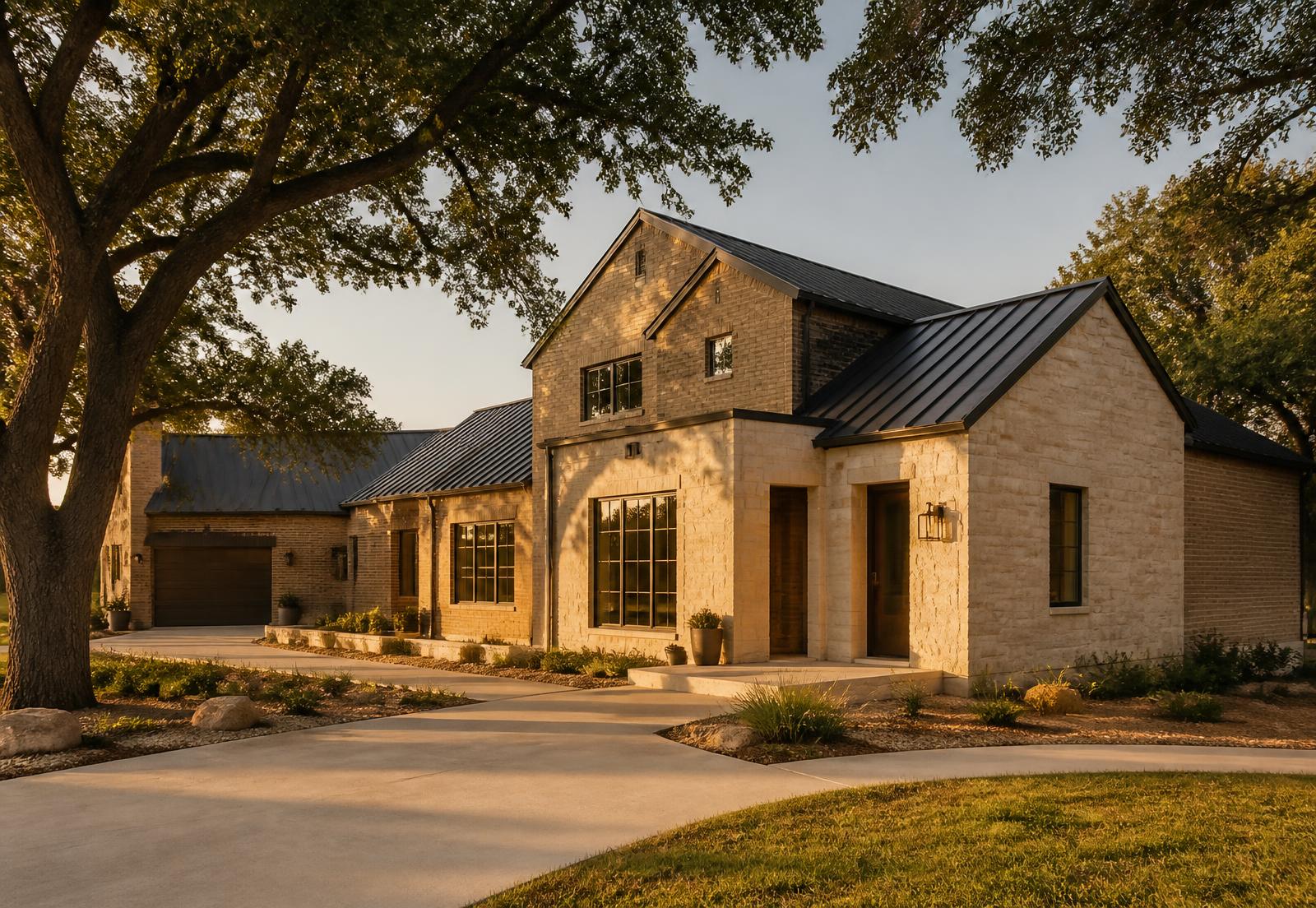
If you are putting off buying a house in Bell County because you have not saved a down payment, two state programs are worth an hour of your attention. Both can put up to 5% of your loan amount toward your down payment or your closing costs, and one of them does not require you to be a first-time buyer. Neither is automatic, and neither is offered by every lender, which is why most buyers never hear about them.
Here is what they are, who qualifies in Bell County, and what to ask a lender.
The two programs that cover Temple, Belton and the rest of Bell County
These are statewide programs, not city grants, so they work the same in Temple, Belton, Salado, Killeen, Harker Heights, Nolanville or Troy.
The Texas State Affordable Housing Corporation runs the first. Through a participating lender you may be able to receive up to 5% of your loan amount toward your down payment, closing costs, or both. It runs in two tracks. Homes for Texas Heroes covers professional educators, police and public security officers, firefighters and EMS personnel, veterans and active military, corrections officers, and nursing and allied health faculty. Home Sweet Texas is for everyone outside those professions. With a school district in every town and Fort Hood next door, that list covers more households here than almost anywhere else in Texas.
The Texas Department of Housing and Community Affairs runs the second, My First Texas Home. It also offers up to 5% of the first mortgage amount for down payment and closing costs, and can be combined with a Mortgage Credit Certificate. Its rules are tighter: TDHCA's own materials say you must be a first-time buyer with a credit score of at least 620, and veterans qualify as well.
The three forms the money comes in, and why the difference matters
This is the part I most often end up explaining, because "down payment assistance" gets described as free money when sometimes it is not. TSAHC offers it three ways:
- A grant — in TSAHC's own words, "free money that never has to be repaid."
- A deferred forgivable second lien, forgiven after three years as long as you do not sell, refinance or move out during that time.
- A deferred repayable second lien, repayable when you sell, transfer, pay off or refinance the first mortgage.
All three get you into the house. Only one is a gift. Take a forgivable second lien, then get orders two years later or refinance the week rates drop, and you have a bill you did not plan for. A repayable second is a quiet balance that comes due when you sell.
That does not make them bad deals. It makes them deals with terms. Ask which one you are being handed, what happens if you sell or refinance inside three years, and get it in writing before you are under contract.
Who qualifies in Bell County
The income ceiling surprises people, because it is higher than almost everyone assumes.
On TSAHC's current limit schedule, the Bell County income limit on the government loan path — FHA, USDA or VA — is $123,500, regardless of family size (TSAHC combined income and purchase price limits, current as of October 2026). In a targeted part of the county it is higher. Conventional loans, and combinations with the mortgage credit certificate, use lower limits that split by household size, so those cases need a lender to run them.
Two more things. With TSAHC you do not have to be a first-time buyer; only the mortgage interest tax credit is tied to a first home, and that is a separate application with its own limits. And purchase price is not the constraint: TSAHC's Bell County sales price limit sits far above anything this market produces, with the county median at $279,066 in August 2026 (Redfin, August 2026).
What 5% actually comes to here
Rough arithmetic on the county median, not on anybody's loan: 5% of a loan near $270,000 is about $13,500 toward a down payment or closing costs. That is not a discount on the house. It is the difference between closing this spring and saving two more years, which for most buyers I work with is the whole question.
Bell County also closed 397 sales in August, about 8% fewer than a year earlier, while prices held (Redfin, August 2026). Fewer competing buyers means more give from sellers on repairs and credits, and assistance works alongside a seller credit, not instead of it.
How to find out where you stand in about a week
- Ask any lender you are considering whether they are an approved participating lender for TSAHC, TDHCA, or both. Many are not, and one who is not has no reason to raise it. Ask before you choose, not after.
- Ask which form of assistance they would put you in — grant, forgivable second lien, or repayable second lien — and get the terms in writing.
- Have them run your income against the Bell County limit for the loan type you are actually using. The government-loan number and the conventional number are not the same.
- Then go look at houses, knowing your real number instead of the one you assumed.
Where to start
If you are six months or more out, the useful next step is not a house. It is one honest conversation about what you qualify for, so you stop guessing at your price range.
I do not originate loans and I am not paid if you use one of these programs. I just see what it costs people to find out too late. Send me a note and I will tell you what I would do in your position. If you would rather see the whole purchase laid out first, the buying process is here — and if you need to sell before you buy, start with a real valuation.